Living intended use
From your SOPs, last validation pack, and current admin screens, AI keeps a draft of who uses the vault, for which GxP records, and what must not change without assessment. You edit it until it stays true.
Services / Veeva managed services
Veeva managed servicesA Vault that is “live” is not finished. Releases arrive, roles drift, tickets pile up, and the SOP no longer matches the screens. CliniGene operates Veeva as a managed service: we keep intended use current, classify work, draft change and release assessments, and support administration under your change-control SOP. Your Vault owner still approves what goes to production.
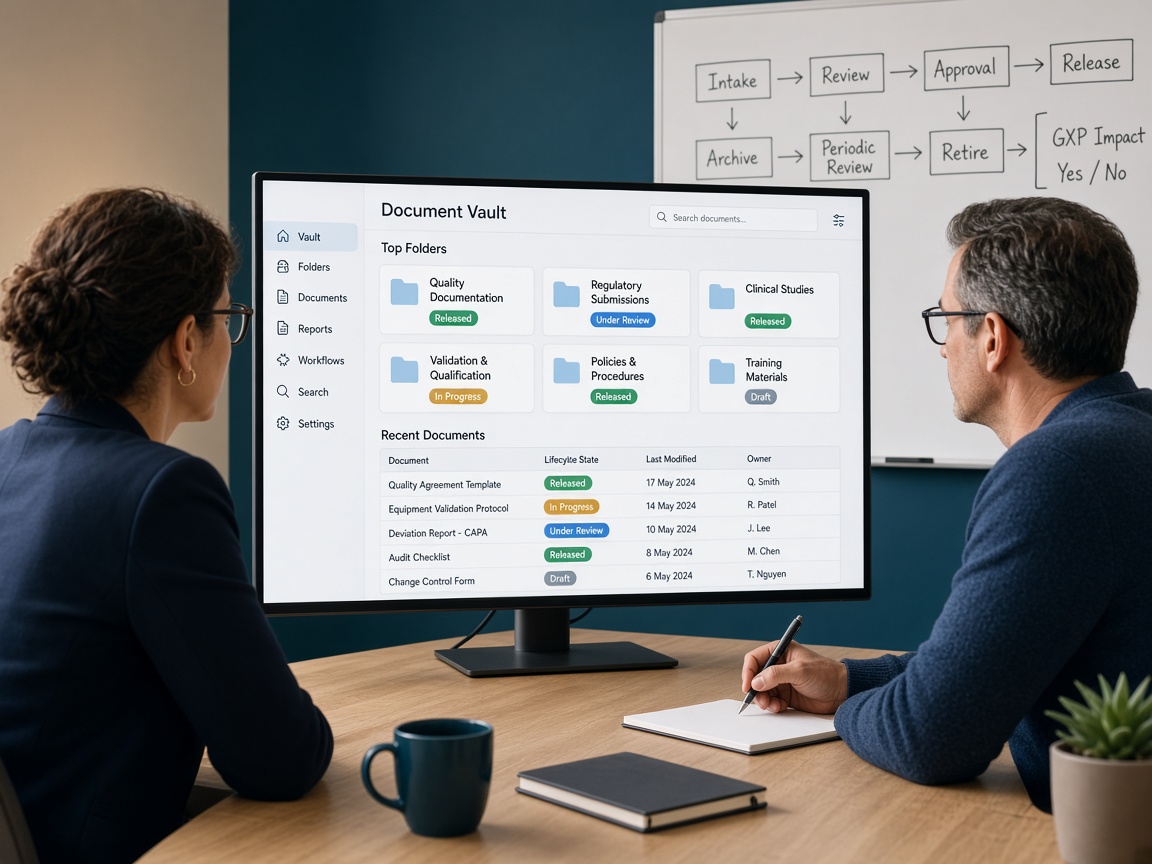
Most Vault pain shows up after go-live. The implementation partner leaves. General releases change behavior. A well-meaning admin adds a lifecycle state that the validation pack never mentioned. Users open tickets that are really training or SOP problems. Nobody owns the living picture of intended use.
Managed services is that ownership: a named operating rhythm for access, configuration change, release impact, ticket triage, and the evidence an inspector will ask for six months later.
AI helps because release notes, ticket text, and configuration exports are long and repetitive. It is not allowed to click production Configure or to decide residual risk. People still approve changes.
An inspector asks who operates the vault, what changed since the last validation, and how the last general release was assessed. You should open intended use, the change log, and a signed release note — not a vendor webinar deck.
Vault business owners, quality, IT, and validation leads who already have eTMF, QualityDocs, QMS, Study Startup, or related Vault applications in use — or who just went live and do not have a standing operations team.
On Veeva managed services, AI drafts release-impact notes, ticket classes, drift lists, and change-assessment language from the vault you already run. Your system owner approves production changes. Your validation lead signs delta assurance. AI drafts maps, flags, first-pass language, and punch lists. A named specialist accepts, edits, or dismisses every official finding. AI does not sign a quality record, approve a vendor, freeze Vault, or speak in an inspection.
Questions on fit? hello@clini-gene.com or the contact form.
Start when the implementation partner is leaving, when a general release is coming and nobody owns impact, or when tickets and silent configuration changes have piled up for a quarter.
Also start right after go-live if you do not have a standing Vault admin. Do not wait until an inspector asks who has been changing workflows.
Each layer has a human gate. AI does not write the official quality record.
From your SOPs, last validation pack, and current admin screens, AI keeps a draft of who uses the vault, for which GxP records, and what must not change without assessment. You edit it until it stays true.
Vendor release notes are read against your intended-use list and configuration. AI proposes what is likely relevant, what is cosmetic, and what needs a delta-validation look. Your CSA owner decides the official split.
Periodic exports or screenshots are compared to the last approved workbook. New states, roles, workflows, or overlays are listed before they become an inspection surprise.
Incoming requests are drafted into training, defect, enhancement, or access. That keeps the backlog honest and feeds change control instead of silent production edits.
For an approved enhancement, AI drafts the impact note, SOP touch-points, and suggested test ideas. Your change board and validation lead still classify and sign.
A current intended-use paragraph, last release assessment, open changes, and who can pull an audit trail — so the war room is not a search party.
Send the study, Vault, vendor, or inspection window. We will say what we need and what a first pass looks like.
Which applications, who the system owner is, how access is granted, and what “managed” covers this quarter (admin only, releases, changes, or all three).
Intended use, configuration workbook (or a first harvest if you never had one), last validation summary, and the ticket/change SOP we will follow.
Release calendar, change intake, access requests, and a weekly or biweekly review. AI drafts; named people decide.
Users, roles, overlays, and documented configuration work under your access rules. We do not improvise in production.
Impact draft → specialist review → delta-validation or documented rationale that nothing GxP-critical moved → your quality approval.
Enhancements go through impact, SOP check, test ideas, and your change control. Drift that appeared without a change is a finding, not a feature.
Workbook, release assessments, ticket themes, and residual risk stay current. That file is what CSV/CSA and inspection-readiness will ask for.
What we operated, what still belongs to you, SOP deltas, and whether the managed scope should grow or shrink.
Setting. Typical: eTMF or QualityDocs already live, thin hypercare, next general release in six weeks, no dedicated Vault admin.
What we do. Onboard, rebuild intended use and a drift baseline, classify the ticket backlog, run the next release assessment, and take standing admin and change intake for the quarter.
What you can show. You can show an inspector who operates the vault, what changed since validation, and why the last release was assured — not a pile of unread release notes.
Onboarding a live vault is usually 4–8 weeks to a working rhythm. After that the service is monthly or quarterly: releases, changes, and a current ops pack. A brand-new vault build is out of this offering unless we agree it as a separate project.
Email hello@clini-gene.com or use the form. Mention Veeva managed services so we route it correctly.
Email hello@clini-gene.com or send this form. The process is already selected.
Tell us the trial, Vault, vendor, or inspection date and what “done” looks like.
Email hello@clini-gene.com if you prefer not to use the form.
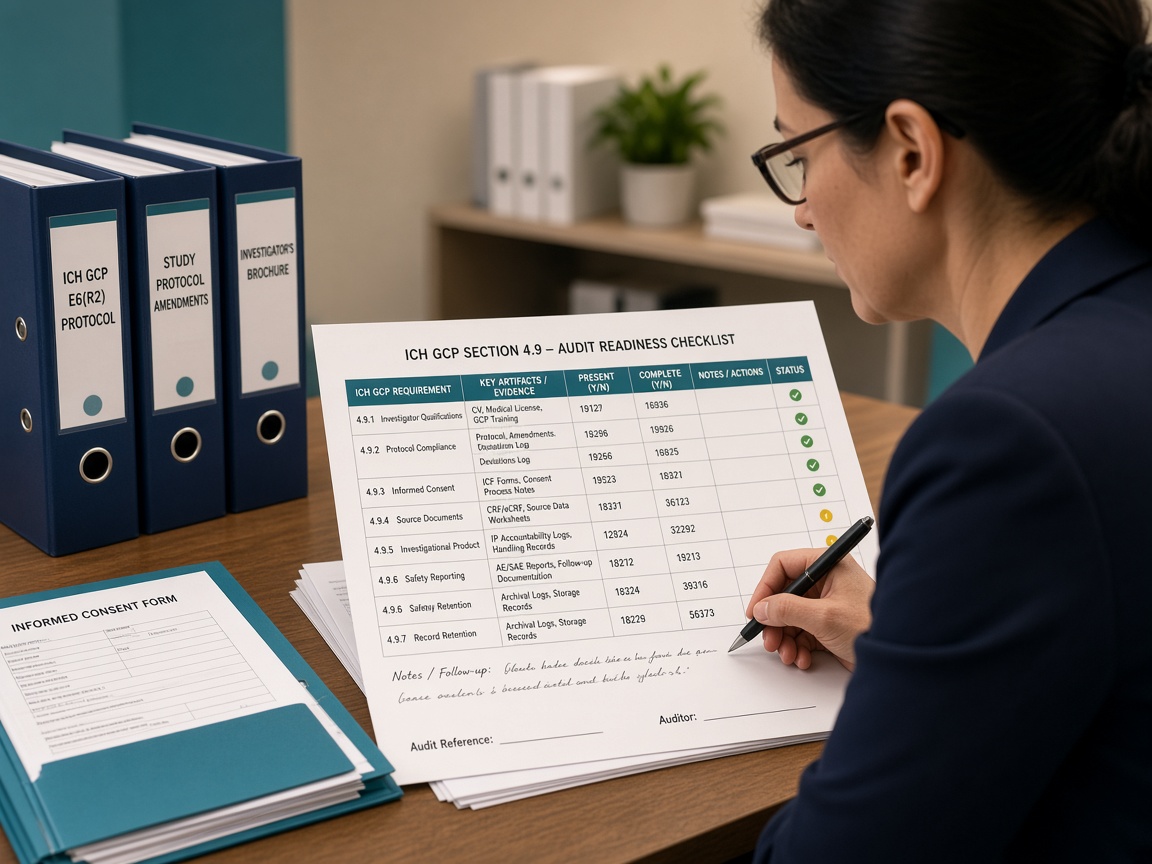
Map ICH-GCP, protocol, and SOP requirements to actual TMF, monitoring, and quality evidence — then close gaps with a reviewed CAPA pack.
Learn more →
Apply GAMP 5 and FDA computer software assurance so testing follows patient-safety and data-integrity risk — not a copy-paste IQ/OQ/PQ for every screen.
Learn more →
Build and keep a risk-based qualification file for CROs, labs, IRT/EDC/eTMF vendors, and GxP cloud — AI compares answers to your SOP; QA decides approve or reject.
Learn more →
Write SOPs, work instructions, forms, validation plans, and reports that match the process people actually run — AI first draft, owner and QA edit, document control publishes.
Learn more →
Reconcile the electronic TMF to the TMF plan and milestones — completeness, QC, and inspectability — with AI pre-checks and TMF specialists issuing the official metric.
Learn more →
Run a scored mock: narrative, war-room index, interviews, and a 30-day closeout plan — AI builds the pack; experienced reviewers run the room.
Learn more →