Intended-use draft
From SOPs and architecture notes, AI proposes who uses the system, on which GxP records, and what a wrong result would do. You edit this until it is boring and true — that paragraph drives everything else.
Services / CSV and CSA
CSV and CSAComputer system validation (CSV) and computer software assurance (CSA) are how you prove a GxP system is fit for intended use. CSA asks you to think: which functions can harm a subject or the data, and what assurance is already available from the vendor? CliniGene uses AI to draft intended use, risk scenarios, and test ideas from your manuals and SOPs. Your CSA owner decides the official mix of scripted tests, unscripted assurance, and vendor evidence.

Traditional CSV often tests everything the same way. Hundreds of scripted steps burn the calendar and still miss the one interface that can silently drop a lab value. CSA was issued so you could put rigor where risk is, and stop performing theater where it is not — but only if you write the rationale down.
Teams get stuck in two opposite errors: (1) “CSA means we barely test,” which will not survive inspection, or (2) “CSA means we still IQ/OQ/PQ every click,” which wastes the guidance. The work is the intended-use statement, the risk table, and the documented split.
AI helps because vendor manuals, release notes, and your last validation pack are long. Drafting failure modes and delta-validation plans is language work. Assigning residual risk is not.
An inspector asks why a dashboard was not scripted and why e-signature was. You open one table: function, risk, method, file pointer. That is CSA. “We followed the vendor” without a cell in that table is not.
CSV/CSA leads, quality systems, IT validation, and system owners for EDC, eTMF, CTMS, QMS, LIMS, safety, and GxP SaaS.
On CSV/CSA work, AI drafts intended use, risk scenarios, the assurance-split table, and protocol language from manuals and your last pack. Your CSA owner decides scripted vs. unscripted vs. vendor evidence. AI drafts maps, flags, first-pass language, and punch lists. A named specialist accepts, edits, or dismisses every official finding. AI does not sign a quality record, approve a vendor, freeze Vault, or speak in an inspection.
Questions on fit? hello@clini-gene.com or the contact form.
Start when a SaaS GxP system is live with an aging IQ/OQ/PQ, when a CSA SOP was just approved, or when the next vendor release will otherwise trigger a full re-test you cannot staff.
Also start for a net-new configured system so the VP is not written after go-live. If Vault is already live, pair this with Veeva managed services for releases and drift.
Each layer has a human gate. AI does not write the official quality record.
From SOPs and architecture notes, AI proposes who uses the system, on which GxP records, and what a wrong result would do. You edit this until it is boring and true — that paragraph drives everything else.
Interfaces, SOUP, cloud vs. on-prem, configurability. AI suggests a GAMP category and supplier-assessment questions. The team confirms the system boundary (what is in the VP vs. a connected system’s VP).
Failure modes against safety, product quality, and data integrity (including audit trail, access, backup). Each function gets a suggested risk and a suggested assurance type: vendor evidence, automated test, unscripted, or scripted protocol.
The split is written as a table an inspector can read: function, risk, assurance method, pointer to evidence. If you cannot fill a cell, that function is not assured yet.
Scripted steps and expected results are drafted only for high-risk / no-vendor-evidence functions. Screenshots and logs are indexed so the report cites files, not “passed.”
New vendor release notes or config exports are diffed against the last validated state. AI proposes a delta plan; you decide what must be re-assured.
Send the study, Vault, vendor, or inspection window. We will say what we need and what a first pass looks like.
One system owner, one validation lead, one quality approver. CSA fails when “everyone” owns it.
Workshop + AI draft + edit. Include what the system must not be used for (e.g. not the legal source of a submission number).
From manuals and admin screens. Mark GxP-critical vs. administrative.
Walk high-impact functions. AI comes with a draft FMEA-style list; the room scores and cuts.
Vendor pack, automated tests, unscripted sessions, scripted IQ/OQ/PQ — each with a why. This is the CSA record.
We draft protocols and the evidence index. Testers execute under your SOP. Deviations are written with AI-assisted language; classification is human.
Summary report ties each critical function to evidence. Residual risk is listed, not hidden.
A checklist and a place to drop the next release notes so the next review is a diff, not a rewrite.
Setting. Typical: SaaS eTMF or QMS already live, validation pack aging, CSA SOP newly approved, next vendor release in 90 days.
What we do. Rewrite intended use, rebuild the risk/assurance table from the vendor pack + your config, draft a lean OQ for high-risk functions only, and leave a delta-validation checklist for the release.
What you can show. You can explain to an inspector why a dashboard was assured via vendor evidence and why e-signature was scripted — in one table.
A single-system CSA reshaping of an existing pack is often 4–10 weeks. For a live Vault, pair this with Veeva managed services so each general release has a documented assurance path.
Email hello@clini-gene.com or use the form. Mention CSV and CSA so we route it correctly.
Email hello@clini-gene.com or send this form. The process is already selected.
Tell us the trial, Vault, vendor, or inspection date and what “done” looks like.
Email hello@clini-gene.com if you prefer not to use the form.
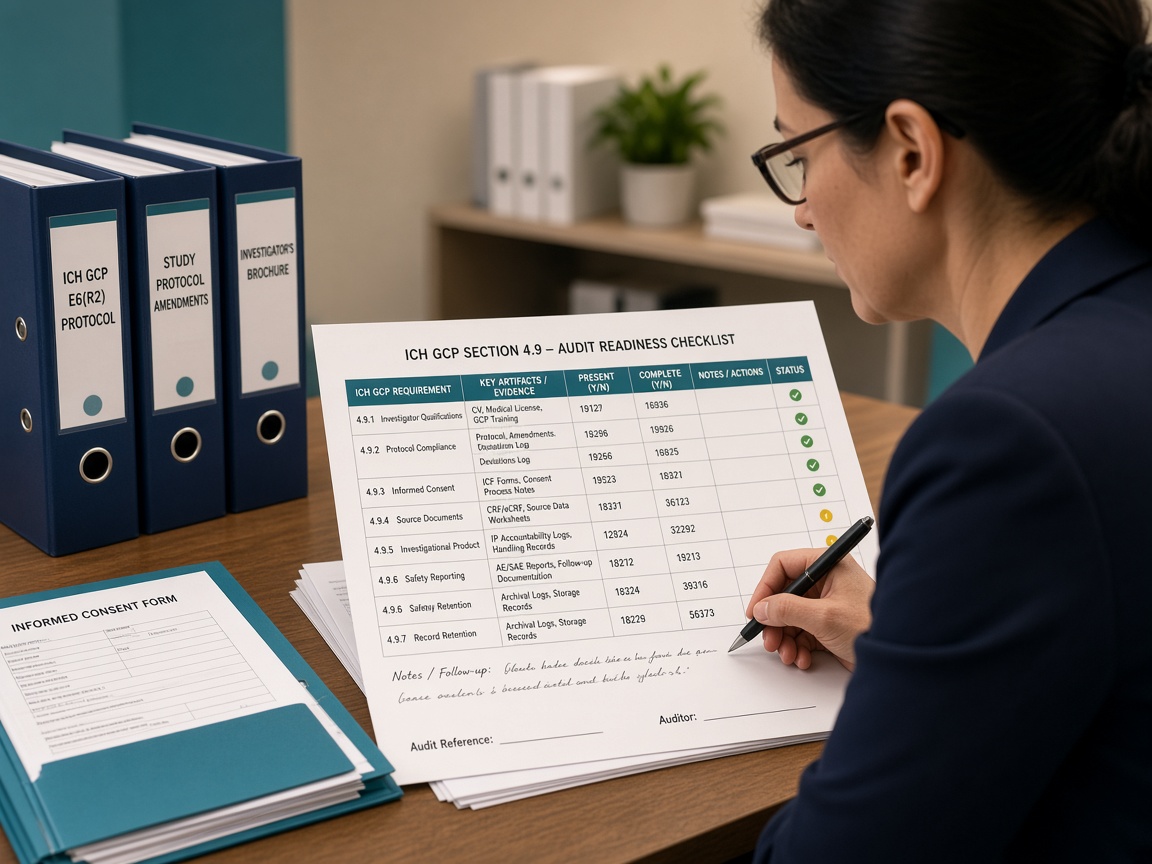
Map ICH-GCP, protocol, and SOP requirements to actual TMF, monitoring, and quality evidence — then close gaps with a reviewed CAPA pack.
Learn more →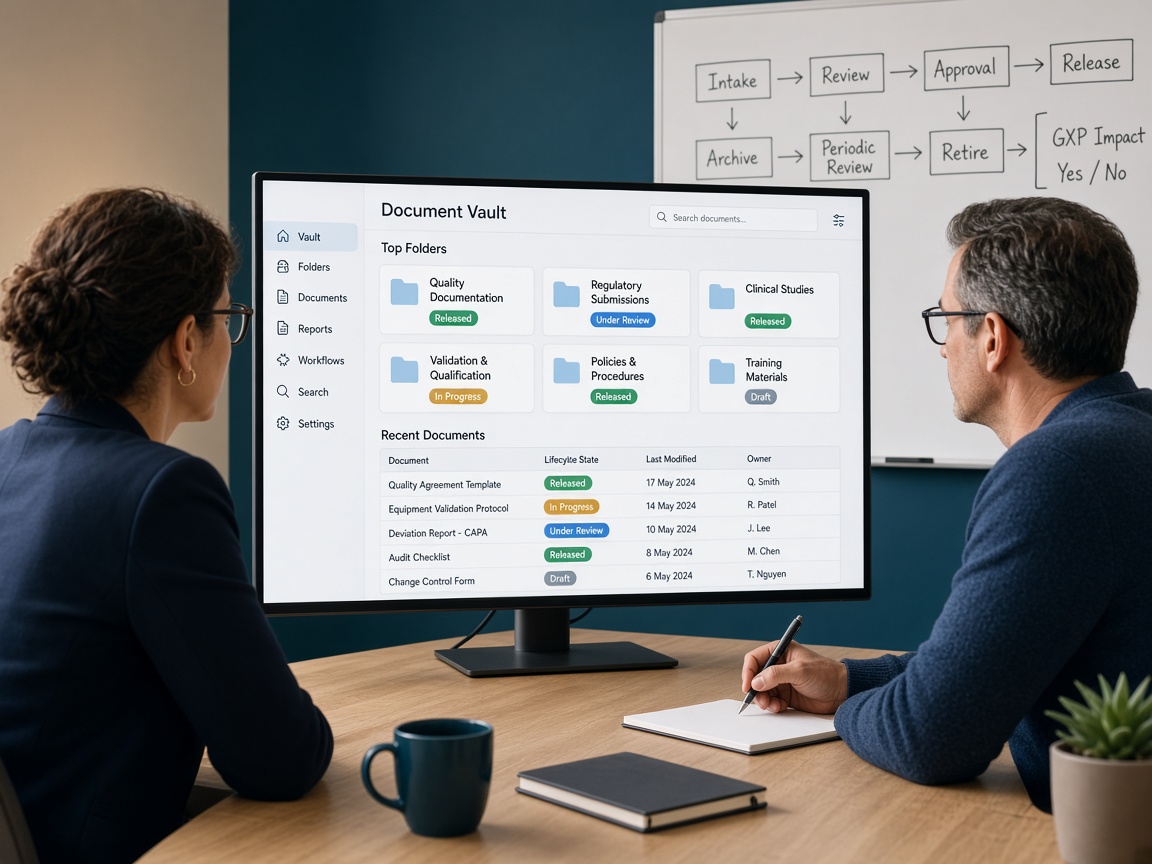
Run Vault after go-live: administration, releases, change control, and delta validation — with AI watching drift and tickets, and your system owner still approving production changes.
Learn more →
Build and keep a risk-based qualification file for CROs, labs, IRT/EDC/eTMF vendors, and GxP cloud — AI compares answers to your SOP; QA decides approve or reject.
Learn more →
Write SOPs, work instructions, forms, validation plans, and reports that match the process people actually run — AI first draft, owner and QA edit, document control publishes.
Learn more →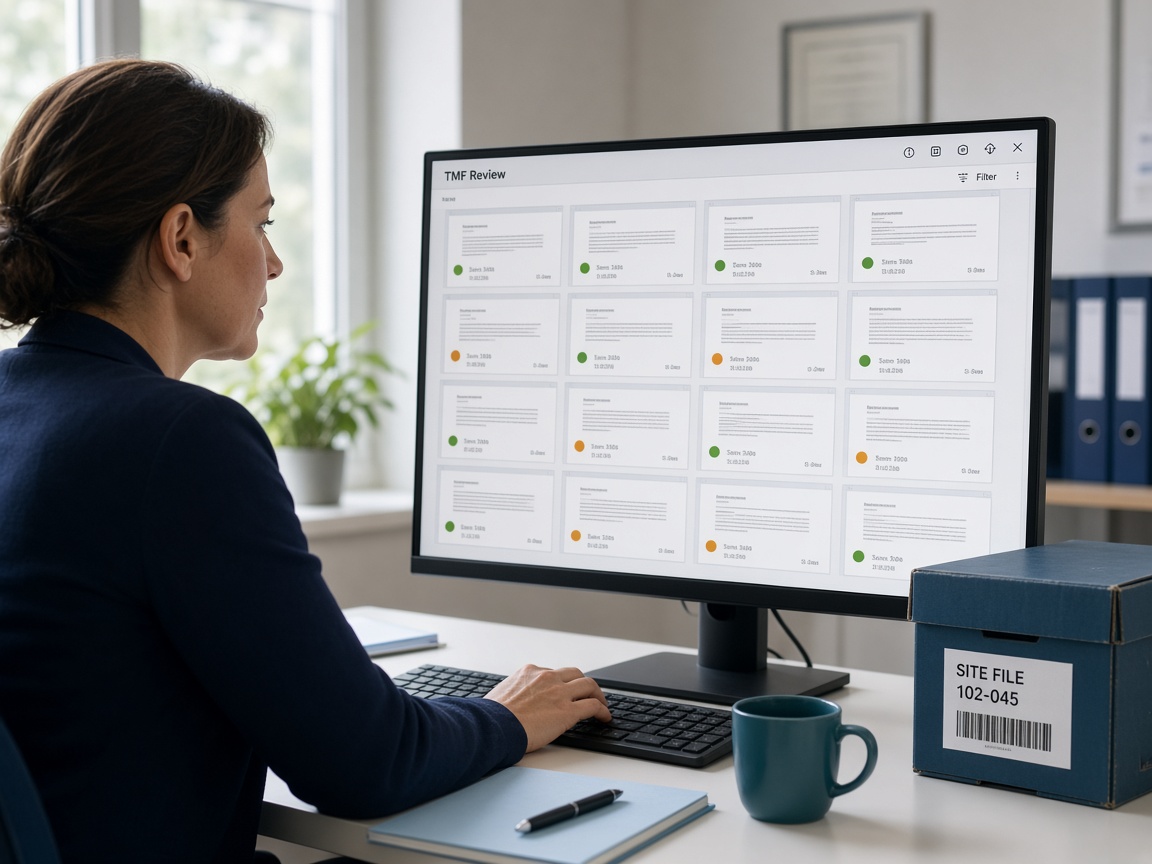
Reconcile the electronic TMF to the TMF plan and milestones — completeness, QC, and inspectability — with AI pre-checks and TMF specialists issuing the official metric.
Learn more →
Run a scored mock: narrative, war-room index, interviews, and a 30-day closeout plan — AI builds the pack; experienced reviewers run the room.
Learn more →