Clause-to-artifact mapping
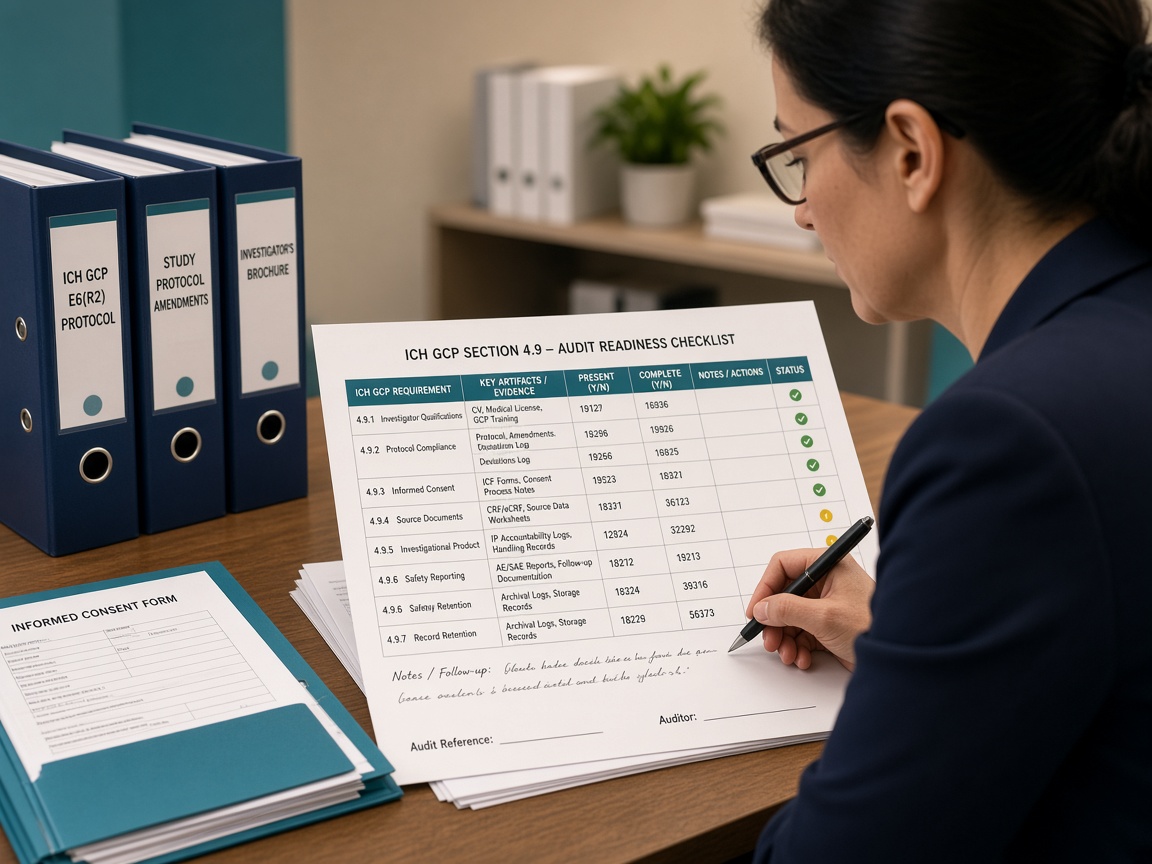
Selected ICH-GCP expectations and SOP requirements are paired with the TMF or CTMS artifact that would satisfy them.
Services / Clinical Quality
Clinical QualityCliniGene helps sponsors and CROs strengthen clinical quality, documentation, and oversight.
CliniGene helps sponsors and CROs strengthen clinical quality, documentation, and oversight.
CliniGene does not replace medical judgment, investigator responsibilities, sponsor oversight, or required regulatory approvals.
CliniGene does not replace medical judgment, investigator responsibilities, sponsor oversight, or required regulatory approvals.
GCP readiness is not a slide deck. It is whether an auditor can follow a subject, a visit, a deviation, or a consent from the protocol to a filed artifact, and whether your quality system can explain what is missing.
eTMF percentages hide empty placeholders. Vendor files die in email. Inspection rooms fail when people and documents tell different stories. CliniGene strengthens sponsor oversight, clinical documentation, eTMF readiness, vendor management, and GCP compliance — with specialists issuing official findings.
Sponsor and CRO quality, clinical operations, TMF managers, study leads, and inspection-prep teams preparing for sponsor audit, CRO oversight review, or health-authority inspection.
AI supports analysis, consistency, traceability, and document preparation. Qualified professionals review every regulated deliverable, and customers retain final approval authority. AI-generated content remains a draft until it has been reviewed and approved by an authorized individual.
Questions on fit? hello@clini-gene.com or the contact form.
Each layer has a human gate. AI does not write the official quality record.
Selected ICH-GCP expectations and SOP requirements are paired with the TMF or CTMS artifact that would satisfy them.
From the TMF plan and milestone, AI reconciles inventory. Placeholders are separated from collected.
Protocol deviations and open CAPAs are clustered so you fix the process, not only the row.
Likely questions paired with artifact paths. Missing path = readiness gap.
Send the study, Vault, vendor, or inspection window. We will say what we need and what a first pass looks like.
Study, systems, whether this is GCP gap, E6(R3) readiness, eTMF, vendor, mock inspection, or a combination.
Protocol family, TMF plan, SOP list, monitoring and CAPA logs, vendor list, prior findings.
Gap assessment against ICH GCP and your procedures, including what R3 changes for your operating model.
Completeness, QC, and inspectability — official QC is human.
Oversight evidence, qualification files, subcontractors.
Themes, owners, effectiveness — classification stays with Quality.
Intended use and proportionate evidence; details sit with CSV/CSA when the system is the object.
Narrative, war-room index, mock support, 30-day closeout. We do not predict a 483.
Setting. Typical: one Phase 2/3 study, eTMF in Vault or another system, CRO in place, inspection or sponsor audit possible in a quarter.
What we do. GCP / E6(R3) view, eTMF reconcile, vendor file check, deviation themes, and an inspection-readiness plan or mock.
What you can show. You can show oversight, the file, and the story — without CliniGene replacing sponsor, investigator, or medical judgment.
A single-study GCP and eTMF pass is often 3–8 weeks. Inspection-readiness with a mock is commonly 4–8 weeks. Ongoing clinical-quality support can be monthly or per milestone.
Email hello@clini-gene.com or use the form. Mention Clinical Quality and Compliance so we route it correctly.
Email hello@clini-gene.com or send this form. The process is already selected.
Tell us the trial, Vault, vendor, or inspection date and what “done” looks like.
Email hello@clini-gene.com if you prefer not to use the form.

Understand where AI is being used, determine potential GxP impact, identify compliance gaps, and establish a responsible implementation roadmap.
Learn more →
Establish the controls required to use AI responsibly in regulated life-sciences operations.
Learn more →
Apply risk-based CSV and CSA principles to produce clear, proportionate, and inspection-ready validation evidence.
Learn more →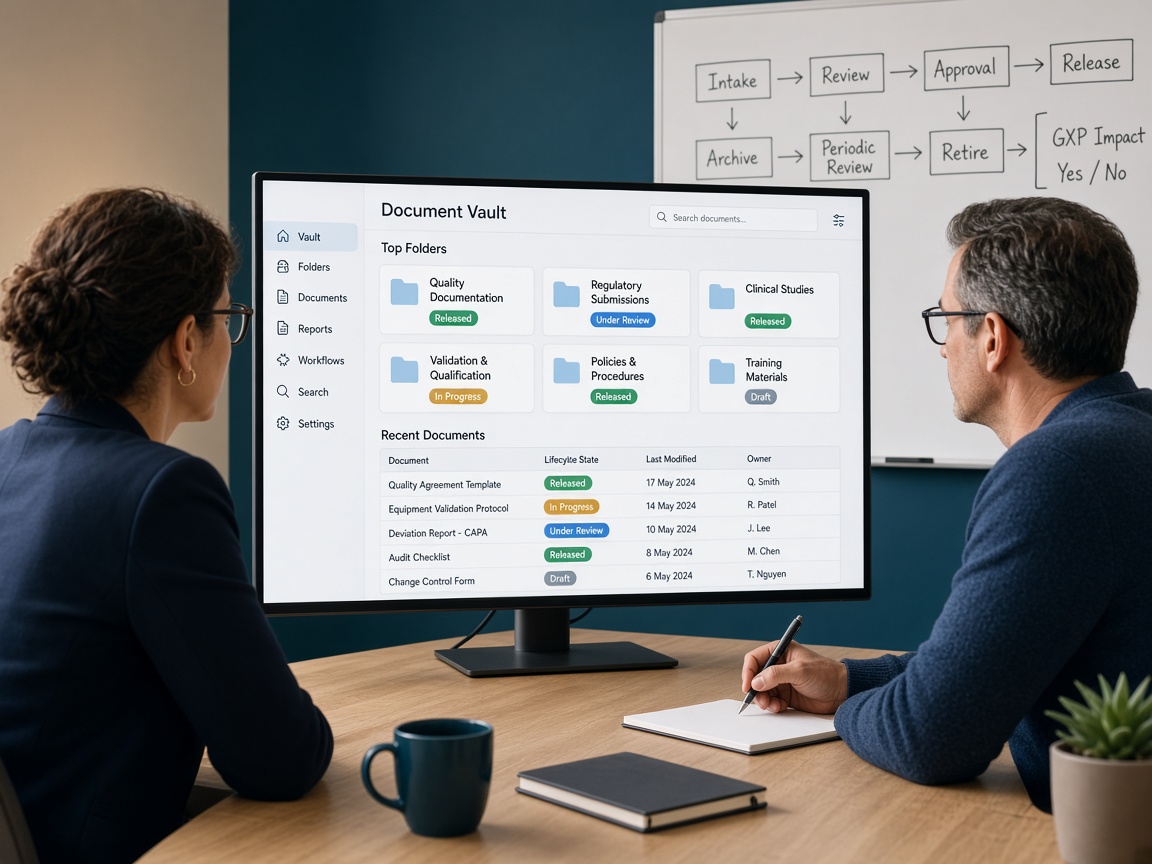
Support Veeva QualityDocs and QMS configuration changes, verification, release readiness, periodic reviews, security assessments, and continuing improvement.
Learn more →
Develop practical quality processes, SOPs, templates, change controls, CAPAs, training programs, and audit-readiness plans.
Learn more →
Flexible continuing support for companies that do not need a full-time Quality Systems or CSV leader.
Learn more →